
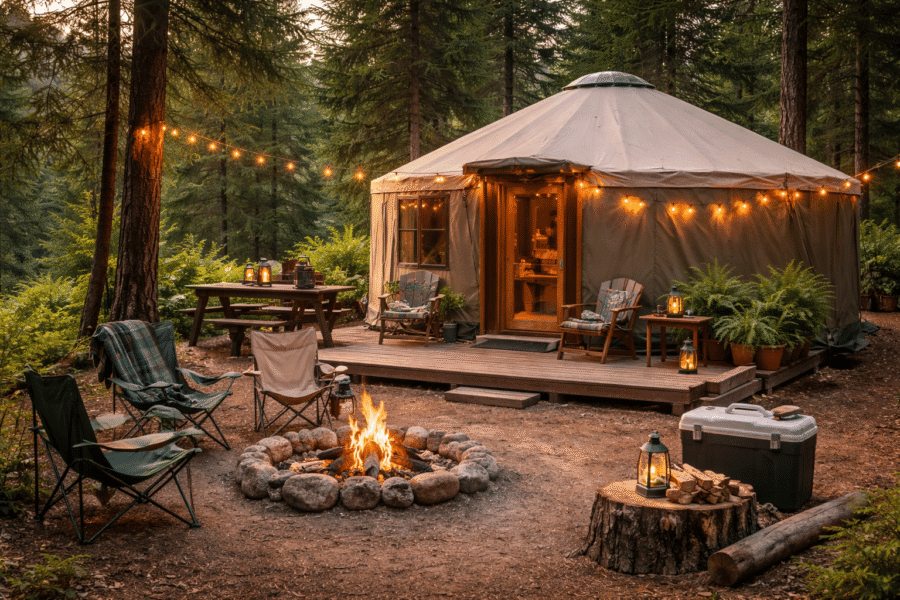
Yurts have come a long way from their origins on the Mongolian steppe. Today, they serve as private retreats, vacation homes, glamping accommodations, and distinctive hospitality spaces. While traditional Mongolian yurts preserve centuries-old craftsmanship, modern yurts can incorporate updated materials, structural designs, and contemporary comfort features.
But what sets them apart, and which option is right for your needs? This guide compares traditional Mongolian yurts and modern yurts across five key areas: construction, materials, design, intended use, and maintenance. You’ll also discover how to choose the right yurt for your property or business and explore the different styles available from Yurtspaces.
What Are Traditional Mongolian Yurts?
Traditional Mongolian yurts, known locally as gers, are circular dwellings developed to support the mobile lifestyle of nomadic communities. Their design reflects generations of practical knowledge, with a structure that can be assembled, dismantled, transported, and rebuilt as needed.
A traditional ger typically features wooden lattice walls, roof poles, a central crown, and layers of felt and fabric secured with ropes. Its circular shape and carefully arranged components create a practical living space designed around portability, ventilation, and insulation.
According to UNESCO’s account of traditional Mongol ger craftsmanship, building a ger involves woodworking, painting, stitching, and felt-making. These skills are passed between generations, making the ger an important part of Mongolian cultural heritage.
Traditional Mongolian Yurt Construction and Materials
Traditional Mongolian yurts use a lightweight wooden framework that supports the roof and exterior coverings. The lattice walls expand to form a circle, while roof poles connect the walls to a central crown. Ropes and fastenings hold the structure and coverings in place.
Common materials include:
- Wood: Lattice walls, roof poles, and the central crown form the main framework.
- Wool felt: Traditionally used for insulation, felt helps regulate indoor temperatures.
- Fabric coverings: Canvas and other covering layers protect the structure from outdoor conditions.
- Ropes and fastenings: These secure the components and allow the yurt to be dismantled when necessary.
At Yurtspaces, the traditional YM series combines a pinewood structure with a three-layer covering system. The configuration includes a waterproof canvas exterior, wool-felt insulation, and an interior silk lining beneath the latticework. Buyers can explore available colors, patterns, and accessories to suit their preferences.
For buyers who appreciate heritage-inspired design and handcrafted details, authentic Mongolian yurts from Yurtspaces offer a starting point for exploring traditional construction alongside customization options.
What Are Modern Yurts?
Modern yurts retain the recognizable circular form of traditional yurts but may incorporate different structural systems, materials, and comfort features. Rather than following one construction method, modern yurts cover a range of designs intended for different applications.
Some prioritize portability and outdoor recreation. Others are designed for glamping, extended stays, or residential projects where buyers may want additional insulation, larger windows, upgraded doors, or contemporary interior finishes.
Modern does not automatically mean better, however. A traditional-style yurt can incorporate contemporary features, and a modern-looking yurt may still use established construction principles. The right choice depends on the specific model, its specifications, and how you plan to use it.
Modern Yurt Construction and Materials
Modern yurts may use wooden frames, steel framing, or combinations of materials. Each approach offers different considerations for appearance, structural design, customization, and maintenance.
Depending on the model, features may include:
- Wooden frames: Provide a natural appearance that complements traditional yurt design.
- Steel framing: Offers a different structural approach and may provide reinforcement in specific configurations.
- Layered coverings: Combine exterior protection with insulation and interior finishes.
- Contemporary windows and doors: Introduce natural light and create a more open interior.
- Optional comfort features: Certain models may accommodate skylights, heating, cooling, and electrical or water connections.
Yurtspaces offers steel-and-wood designs that combine different materials and styling elements. The YM L series, for example, features steel framing, a wooden roof, wool-felt insulation, and decorative details. The Euro Yurt offers a contemporary design with a wooden frame, a multilayer covering, tempered-glass windows, and model-specific comfort options.
Traditional Mongolian Yurts vs. Modern Yurts: 5 Key Differences
Although traditional and modern yurts share a circular layout, their construction, materials, appearance, and intended applications can differ.
| Feature | Traditional Mongolian yurts | Modern yurts |
| Construction | Wooden lattice walls, roof poles, and a central crown | Wooden frames, steel framing, or hybrid configurations |
| Materials | Wood, wool felt, fabric coverings, and decorative finishes | Wood or steel, layered coverings, insulation, and optional glazing |
| Design | Heritage-inspired patterns and handcrafted details | Traditional, contemporary, or mixed styling |
| Intended use | Traditional living, cultural experiences, retreats, and glamping | Glamping, guest accommodation, retreats, and suitable residential applications |
| Maintenance | Inspect wood, ropes, coverings, and insulation | Inspect structural components, coverings, glazing, seals, and installed systems |
These are general distinctions rather than strict rules. Some traditional Mongolian yurts incorporate modern materials and features, so always check the specifications of the individual model.
1. Construction and Structural Design
Traditional Mongolian yurts use a framework built around lattice walls, roof poles, and a central crown. These components work together to create a circular structure that can be assembled and dismantled.
Modern yurts may retain this basic arrangement while incorporating steel framing, modified structural systems, or other construction features. The suitability of any design depends on more than its frame material. Anchoring, installation, engineering, and local environmental conditions also matter.
If you plan to install a yurt in an area exposed to strong winds or heavy snow, ask about its structural specifications and site requirements. Do not assume that a particular material or product label guarantees suitability for every climate.
2. Materials, Insulation, and Weather Protection
Traditional designs often use wood, wool felt, and fabric coverings. These materials contribute to the yurt’s character and can provide practical insulation and weather protection when properly specified and maintained.
Modern designs may combine traditional materials with reinforced frames, specialized exterior coverings, additional insulation, or glazed openings. These features expand design possibilities but also affect maintenance and installation requirements.
Climate should be an important part of your decision. Rainfall, humidity, sunlight, wind, and snow can influence material performance. Insulation, ventilation, moisture control, and the condition of exterior coverings all deserve attention.
The U.S. Department of Energy’s guide to insulation and air sealing explains why insulation and air sealing work together to support comfort and building performance. For a yurt, ask the manufacturer which insulation layers are included, what upgrades are available, and which conditions the selected model is designed to accommodate.
3. Design, Appearance, and Customization
Traditional Mongolian yurts are known for their handcrafted details, decorative woodwork, distinctive patterns, and cultural character. These elements can create a warm, inviting setting for a private retreat or a hospitality experience built around traditional design.
Modern yurts may offer contemporary styling, larger glazed openings, different door configurations, skylights, and customized interior finishes. Depending on the product, these features can create a brighter interior or a more modern appearance.
The two approaches are not mutually exclusive. A yurt can preserve Mongolian craftsmanship while incorporating selected contemporary features.
At Yurtspaces, customization options vary by product family. Buyers can explore available exterior colors, patterns, decorative details, and structural or comfort features to find a design that fits their vision.
4. Intended Use: From Traditional Living to Modern Glamping
Traditional Mongolian yurts were developed as homes for mobile communities. Their portability and practical layout remain relevant to buyers who value traditional construction and a close connection to the outdoors.
Modern yurts serve a broader range of applications, including:
- Glamping resorts: Distinctive guest accommodations designed around a hospitality concept.
- Private retreats: Separate spaces for relaxation, creative work, or time outdoors.
- Vacation properties: Unique structures for suitable recreational or seasonal use.
- Guest accommodation: Additional space for visitors, subject to local regulations and site conditions.
- Residential projects: Potential living spaces where the selected model, utilities, insulation, and applicable building requirements support the intended use.
Think about how often the yurt will be occupied, how many people it needs to accommodate, and which amenities matter most. Full-time residential use requires careful planning for heating, ventilation, plumbing, electrical systems, and local building requirements. A structure suitable for occasional recreation may not meet the same needs.
5. Maintenance and Long-Term Care
Neither traditional nor modern yurts should be considered maintenance-free. Both need regular inspections, appropriate cleaning, and care suited to their materials and environment.
For traditional Mongolian yurts, pay attention to the wooden framework, connections, ropes, insulation, and fabric coverings. Keep moisture from accumulating, inspect for wear, and address small problems before they affect other components.
Modern yurts may require many of the same checks, along with additional attention to steel components, windows, doors, seals, skylights, and installed heating or cooling equipment.
Your maintenance routine should reflect the model’s construction and the conditions at your site. A yurt exposed to frequent rain or intense sunlight may need different care from one installed in a sheltered location.
Before ordering, ask the Yurtspaces team for recommended cleaning methods, inspection schedules, covering care, and model-specific maintenance guidance.
How to Choose the Right Yurt for Your Needs
The best yurt is the one that fits your intended use, design preferences, site, and budget.
Choose a traditional Mongolian yurt if you value heritage-inspired design, handcrafted details, and the distinctive character of Mongolian craftsmanship. These qualities can be especially appealing for private retreats, culturally inspired hospitality, and glamping projects with a traditional aesthetic.
Consider a modern yurt if you need particular structural options, contemporary glazing, additional insulation, or specific comfort features. Depending on the model, these options may be useful for upscale guest accommodation, extended stays, or projects requiring a tailored configuration.
Before making a decision, consider the following:
- Will the yurt be used seasonally or throughout the year?
- What weather conditions will it need to accommodate?
- How much interior space do you need?
- Do you prefer traditional detailing or contemporary finishes?
- Which insulation, window, heating, cooling, or utility options are essential?
- What installation, anchoring, and local permitting requirements apply?
- What ongoing maintenance can you reasonably manage?
Compare dimensions, materials, available features, and pricing before deciding. Reviewing Yurtspaces pricing and available yurt configurations can help you understand the options and plan your project.
Find the Right Mongolian or Modern Yurt at Yurtspaces
Traditional Mongolian yurts and modern yurts offer different ways to enjoy the distinctive form of yurt architecture. Traditional designs stand out for their cultural heritage and handcrafted details, while modern configurations can provide additional structural and comfort options. In many cases, the right choice combines both.
Yurtspaces offers traditional Mongolian yurts, steel-and-wood designs, and contemporary options for different preferences and intended uses. Features vary by model, so comparing specifications is an important step toward finding the right fit.
Ready to explore your options? Browse our Mongolian yurts for sale and compare them with our steel and wooden yurts. Find a design that fits your vision, then contact the Yurtspaces team to discuss customization and the requirements for your project.
Article Written By Neha Verma


